Best Mirrorless Cameras for Travel Photography

- Quick Take (TL;DR)
- Top Picks Comparison Table
- How to Choose a Travel Mirrorless Camera
- Detailed Recommendations (Why These Bodies Travel So Well)
- 1) Sony a7C II - Smallest Full-Frame Sweet Spot
- 2) Sony a6700 - Versatile Hybrid for Photo + Video
- 3) Canon EOS R8 - Lightest Full-Frame Look
- 4) Canon EOS R7 - APS-C Reach & Speed
- 5) Fujifilm X-S20 - The Do-Everything Traveler
- 6) Fujifilm X-T5 - Detail Lover's APS-C
- 7) Nikon Z6 II - Low-Light Reliability
- 8) OM System OM-5 - The Hiker's Best Friend
- 9) Panasonic Lumix S5 II - Serious Hybrid in a Compact FF Body
- 10) Fujifilm X100-series (Honorable Minimalist)
- Travel Use-Case Matrix (What to Carry, Fast)
- Lens Kits That Travel Light (Per System)
- Essential Accessories (Pack Once, Use Daily)
- Quick Settings Cheat Sheet (Save to Custom Modes)
- Budget Ladder (What to Expect at Each Level)
- Care, Security & Insurance
- Frequently Asked Questions
- Sample Travel Kits (Ready to Pack)
- Conclusion
Whether your itinerary is a weekend city break or a months-long round-the-world journey, the right mirrorless camera can elevate every scene you bring home. Travelers need a body that's compact, light, fast to operate, and dependable in tough weather-with lenses that cover everything from tight interiors to far-off peaks. This guide cuts through the noise with practical, ad-friendly advice and carefully chosen recommendations that balance size, performance, and value.
Quick Take (TL;DR)
-
If you want the smallest full-frame look: Sony a7C II with a compact 28-60mm zoom.
-
If you want the best balance under a kilo, all-in: Fujifilm X-S20 or Canon EOS R7 with an 18-150mm.
-
If low light and people shots matter most: Nikon Z6 II or Canon EOS R8 with a 35mm prime.
-
If you hike and need extreme stabilization: OM System OM-5 with 12-45mm PRO.
-
If you're a hybrid shooter (photo + video): Panasonic Lumix S5 II or Sony a6700.
Top Picks Comparison Table
Specs are summarized for travel-focused decision-making: weight and battery life are general/typical, stabilization indicates in-body image stabilization (IBIS), and "best for" highlights the use-case travelers care about most.
| Camera | Sensor Size | Resolution | IBIS | Typical Carry Weight (body only) | Video Modes | Weather Sealing | Battery Life (typical) | Best For |
|---|---|---|---|---|---|---|---|---|
| Sony a7C II | Full-frame | ~33 MP | Yes | Lightweight, compact body | 4K up to high frame rates | Basic sealing | Solid for a small FF | Small full-frame kit, street travel |
| Sony a6700 | APS-C | ~26 MP | Yes | Very light | 4K up to high frame rates | Basic sealing | Good for APS-C | Hybrid vlog + photo |
| Canon EOS R8 | Full-frame | ~24 MP | No | Extremely light | 4K oversampled | Basic sealing | Moderate | Low-light travel with tiny primes |
| Canon EOS R7 | APS-C | ~32 MP | Yes | Light | 4K up to high frame rates | Improved sealing | Good | Wildlife, action, long reach |
| Fujifilm X-S20 | APS-C | ~26 MP | Yes | Light | 4K/6K-class oversampling | Basic sealing | Good | Do-everything traveler |
| Fujifilm X-T5 | APS-C | ~40 MP | Yes | Light-mid | 6K/4K options | Weather-sealed | Good | Detail-rich landscapes |
| Nikon Z6 II | Full-frame | ~24.5 MP | Yes | Midweight | 4K standard | Weather-sealed | Good+ | People, low light, general travel |
| OM System OM-5 | Micro Four Thirds | ~20 MP | Yes (class-leading) | Very light | 4K standard | Weather-sealed | Great | Hiking, long days, handheld night |
| Panasonic Lumix S5 II | Full-frame | ~24 MP | Yes | Midweight | Strong video suite | Weather-sealed | Good | Serious hybrid creators |
| Fujifilm X100-series* | APS-C (fixed lens) | ~26 MP | No/limited (lens-IS variants vary) | Ultralight | 4K standard | Basic sealing | Good | One-lens simplicity & style |
*While the X100-series isn't an interchangeable-lens mirrorless, many travelers love it as a minimalist, always-with-you companion; we include it as an honorable mention for those who value weight and simplicity above all.
How to Choose a Travel Mirrorless Camera
1) Size & Weight. You'll feel every extra gram by day three. Prioritize bodies under ~600 g and compact zooms/prime lenses. A smaller bag also looks less conspicuous-useful for city travel.
2) Stabilization (IBIS). IBIS buys you sharp handheld photos at night and stable handheld video. If you shoot a lot after sunset or in museums/temples where tripods aren't allowed, IBIS is a quiet superpower.
3) Autofocus & Subject Detection. Modern AF locks onto eyes, faces, birds, vehicles, and more-great for candid street moments and fast travel days when you can't fiddle with settings.
4) Sensor Size (Look vs. Weight).
-
Full-frame: creamier background blur, cleaner high-ISO; heavier lenses.
-
APS-C: excellent quality with smaller, cheaper lenses-great balance for most travelers.
-
Micro Four Thirds: lightest kits with outstanding stabilization; depth of field is deeper at the same framing.
5) Lens Ecosystem. Pick a mount with compact travel zooms (e.g., 24-70/28-75 equivalents) and a small fast prime (e.g., 35mm or 50mm equiv.). One lens for the day, one prime for night = versatile, light.
6) Weather Resistance. Dust, spray, and sudden rain are inevitable. If you shoot outdoors a lot, pick a body and lens with sealing.
7) Battery & Charging. USB-C charging is a lifesaver. Pack at least one spare battery; two if you film.
8) Video Tools. If you vlog, look for easy 4K, reliable AF in video, and stabilization. A flip screen and mic input are travel-friendly.
9) Budget. Spend in this order: lenses → body → audio/light. Good glass outlasts bodies.
Detailed Recommendations (Why These Bodies Travel So Well)
1) Sony a7C II - Smallest Full-Frame Sweet Spot
Why it stands out: Full-frame look in a compact body, strong autofocus, and IBIS for night streets and interiors.
Where it shines: City breaks, portraits, low light, cafes, museums.
What to know: Fewer direct controls than pro bodies; pair with small primes/compact zooms to keep the size advantage.
Ideal travel kit: 28-60mm compact zoom + 35mm f/2 or 40mm f/2 prime.
2) Sony a6700 - Versatile Hybrid for Photo + Video
Why it stands out: APS-C IBIS, excellent AF, strong video options in a tiny package.
Where it shines: Vlogging, B-roll, casual wildlife with lightweight telephotos.
What to know: Keep lenses compact to preserve the portability.
Ideal travel kit: 16-55mm fast standard zoom or an 18-135mm travel zoom; add a 24mm prime for night scenes.
3) Canon EOS R8 - Lightest Full-Frame Look
Why it stands out: Extremely light full-frame with great image quality and color.
Where it shines: Handheld night street, food, people.
What to know: No IBIS; compensate with fast lenses and stabilized lenses where possible.
Ideal travel kit: 24-50mm compact zoom + 35mm f/1.8 prime.
4) Canon EOS R7 - APS-C Reach & Speed
Why it stands out: IBIS, high resolution APS-C, and speedy AF for wildlife/action on the trail.
Where it shines: Safaris, air shows, distant architecture details.
What to know: Slightly larger than ultra-small bodies but still light; lens choices are expanding-consider EF/EF-S via adapter if needed.
Ideal travel kit: 18-150mm all-in-one + a small 22-35mm prime equivalent for night.
5) Fujifilm X-S20 - The Do-Everything Traveler
Why it stands out: IBIS, color science, and film simulations in a compact body; excellent for creators moving between photo and video.
Where it shines: City to nature, day to night, straight-out-of-camera looks.
What to know: Keep to compact XF lenses for balance.
Ideal travel kit: 18-55mm or 16-80mm plus a 23mm or 35mm prime.
6) Fujifilm X-T5 - Detail Lover's APS-C
Why it stands out: High-resolution sensor makes landscapes, skylines, and textures pop; great ergonomics and dials.
Where it shines: Architecture, landscapes, fine detail, printed travel albums.
What to know: Higher resolution rewards good technique; IBIS helps.
Ideal travel kit: 16-80mm for range + a tiny 27mm pancake for pocket-able days.
7) Nikon Z6 II - Low-Light Reliability
Why it stands out: Balanced full-frame body with IBIS and comfortable handling; a trustworthy all-rounder.
Where it shines: People, night markets, interiors, handheld twilight.
What to know: Pair with compact Z primes for a surprisingly light FF kit.
Ideal travel kit: 24-70mm f/4 + 40mm or 28mm compact prime.
8) OM System OM-5 - The Hiker's Best Friend
Why it stands out: Excellent IBIS, tough weather sealing, and the lightest lenses of any system for the range you get.
Where it shines: Long hiking days, waterfalls, hand-held night shots, macro in botanical gardens.
What to know: Smaller sensor means deeper depth of field at the same framing-often a positive for travel storytelling.
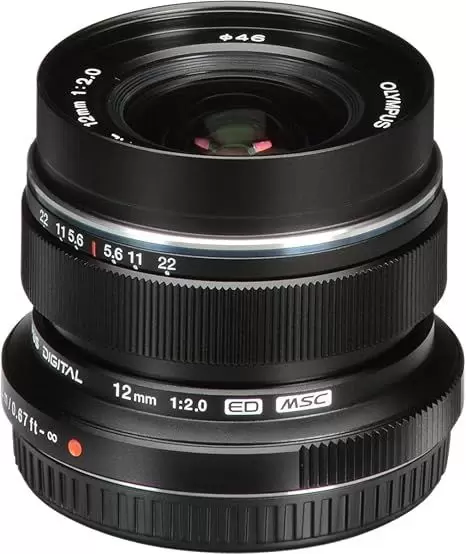
Ideal travel kit: 12-45mm PRO + 40-150mm compact tele or a 17mm fast prime.
9) Panasonic Lumix S5 II - Serious Hybrid in a Compact FF Body
Why it stands out: Robust video suite with reliable IBIS and strong photo output.
Where it shines: Travel films, interviews on the road, low-light video.
What to know: Body is compact, lenses can be larger; choose carefully.
Ideal travel kit: 20-60mm (surprisingly versatile) + 50mm fast prime.
10) Fujifilm X100-series (Honorable Minimalist)
Why it stands out: One fixed lens, discreet body, superb colors-a creative constraint that frees you to enjoy the trip.
Where it shines: Street, cafes, museums, quiet spaces where changing lenses is annoying.
What to know: Not interchangeable-lens; add-on converters can expand the field of view.
Ideal travel kit: Just the camera, a spare battery, and a wrist strap.
Travel Use-Case Matrix (What to Carry, Fast)
| Scenario | Body Recommendation | Lens Strategy | Why It Works |
|---|---|---|---|
| One-bag city trip | Sony a7C II / Fujifilm X-S20 | Compact zoom + 35mm prime | All-day flexibility with low-light option |
| Hiking & rain-prone | OM-5 / Nikon Z6 II | Weather-sealed standard zoom | Tough body + IBIS for handheld landscapes |
| Wildlife/long reach | Canon R7 / Sony a6700 | 100-400/150-600 class tele + small prime | APS-C reach, fast AF |
| Night street & food | Canon R8 / Nikon Z6 II | 35mm or 50mm fast prime | Clean high-ISO, shallow depth-of-field |
| Vlog + photo hybrid | Sony a6700 / Lumix S5 II | Wide zoom with OIS + on-camera mic | Flip screen, stable 4K, good AF |
| Minimalist pocket style | X100-series | Fixed 23mm-equiv. | Ultralight, always ready |
| Beaches & bright sun | Fujifilm X-T5 / OM-5 | Standard zoom + polarizer | Color pop, sky/water control |
| Cold destinations | Nikon Z6 II / OM-5 | Sealed zoom + extra battery | Good grip, battery swaps with gloves |
Lens Kits That Travel Light (Per System)
-
Sony E (Full-Frame): 28-60mm compact zoom; 35mm f/2 or 40mm f/2; 20-70mm for one-lens trips.
-
Sony E (APS-C): 18-135mm or 16-55mm; 24mm f/1.4 or 35mm f/1.8 for night.
-
Canon RF / RF-S: 24-50mm / 24-105mm f/4-7.1 compact; 35mm f/1.8 macro; 18-150mm for RF-S bodies.
-
Fujifilm X: 18-55mm or 16-80mm; 23mm f/2 or 35mm f/2; 27mm pancake for stealth.
-
Nikon Z: 24-70mm f/4; 28mm or 40mm compact prime; 14-30mm f/4 for landscapes.
-
Micro Four Thirds (OM System/Panasonic): 12-45mm PRO or 12-35mm f/2.8; 17mm or 25mm prime; 40-150mm compact tele.
-
L-Mount (Panasonic/Sigma/Leica): 20-60mm + 50mm prime; consider Sigma "Contemporary" primes for light weight.
Essential Accessories (Pack Once, Use Daily)
-
Spare batteries + USB-C charger (charge from power bank on trains).
-
Travel tripod (tabletop or carbon 1-1.2 kg) if you shoot night cityscapes.
-
Circular polarizer for sky/water, ND filter for smooth waterfalls.
-
Wrist strap for cities; sling for hikes.
-
Rain cover (or a simple shower cap) and microfiber cloths.
-
Two SD cards (V30 for 4K; V60+ if you record high bitrate).
-
Clip-on mic if you film talking heads.
-
Lens pen + blower for dust in deserts and on ferries.
Quick Settings Cheat Sheet (Save to Custom Modes)
-
Street/cafes (people): A mode, f/2-f/4, Auto ISO with min shutter 1/250 s, face/eye AF.
-
Architecture/landscapes: A mode, f/5.6-f/8, ISO 100-400, tripod or IBIS.
-
Night handheld: A mode, f/1.4-f/2.8, Auto ISO up to 6400-12800, min shutter 1/60 s, IBIS on.
-
Action/wildlife: S mode 1/1000-1/2000 s, Auto ISO, subject detection for animals/birds.
-
Waterfalls: S mode 1/4-1 s with ND filter, IBIS or tripod, ISO 100.
-
Vlogging: 4K, 24-30p, face AF, stabilization on, external mic when possible.
Budget Ladder (What to Expect at Each Level)
-
Value APS-C bodies + kit zoom: Light, capable, great for social sharing and prints. Add a small prime for night.
-
Midrange APS-C with IBIS or entry full-frame: Strong AF, better dynamic range, better battery and weather sealing.
-
Advanced full-frame or pro APS-C: More controls, tougher build, better EVFs, best AF/video options. Choose if you shoot daily and print large.
Care, Security & Insurance
-
Discretion matters. Choose a nondescript bag; avoid dangling logos.
-
Register gear serials; photograph receipts; store copies in the cloud.
-
Split storage. Keep a spare card and a backup drive separate from the camera when in transit.
-
Wipe down nightly. Salt spray, dust, and sunscreen degrade gear.
-
Back up daily. Card → phone/tablet → cloud or SSD.
Frequently Asked Questions
Is full-frame required for great travel photos?
No. APS-C and Micro Four Thirds deliver excellent results with lighter lenses. Full-frame helps in low light and for shallow background blur, but choice of lens and your timing matter more.
Do I need IBIS?
If you shoot at night, in museums, or handheld video, IBIS is a major upgrade. If your body lacks IBIS, use stabilized lenses and a fast prime.
How many lenses should I pack?
One versatile zoom + one small prime covers nearly everything: the zoom for daylight versatility, the prime for low light and subject isolation.
Are all-in-one superzooms good for travel?
Yes for convenience; image quality is slightly softer than multiple lenses, but you'll get shots you'd otherwise miss while changing lenses.
How many batteries do I need?
At least one spare. Video shooters should pack two spares. USB-C charging simplifies everything.
Sample Travel Kits (Ready to Pack)
-
Street-first, low weight: Sony a7C II + 28-60mm + 35mm f/2; wrist strap, two batteries, 64-128 GB V30 cards.
-
Hike-ready, weatherproof: OM-5 + 12-45mm PRO + 40-150mm compact; rain cover, small carbon tripod, polarizer.
-
Hybrid creator: Sony a6700 or Lumix S5 II + wide zoom (10-20mm equiv. APS-C or 20-60mm FF) + on-camera mic, mini LED.
Conclusion
The "best" travel mirrorless camera isn't a spec sheet; it's the one you'll actually carry. If your bag stays light and your controls are intuitive, you'll take more photos, at better times of day, in more places. Start with a compact body, add one do-it-all zoom and one small prime, and focus on moments. The rest is packing, practice, and curiosity.